Caramelized onions show up in everything from French onion soup to biryani, and they're one of the more commonly rushed techniques in home cooking. The deep golden-brown, sweet result takes real time — there isn't a genuine shortcut, only ways to make the wait less hands-on.
What's actually happening
Raw onions are sharp and slightly bitter because of sulfur compounds and a fair amount of water. Slow, low heat does two things at once: it breaks down those sulfur compounds, and it evaporates the water, concentrating the onion's natural sugars. Those sugars then brown through the Maillard reaction and caramelization, which is what produces the deep color and sweet, savory flavor. Neither of those processes can be meaningfully sped up without changing the result.
The actual process
- Slice onions evenly (thin to medium slices cook more evenly than thick chunks).
- Cook in butter or oil over low-to-medium heat, stirring occasionally, not constantly.
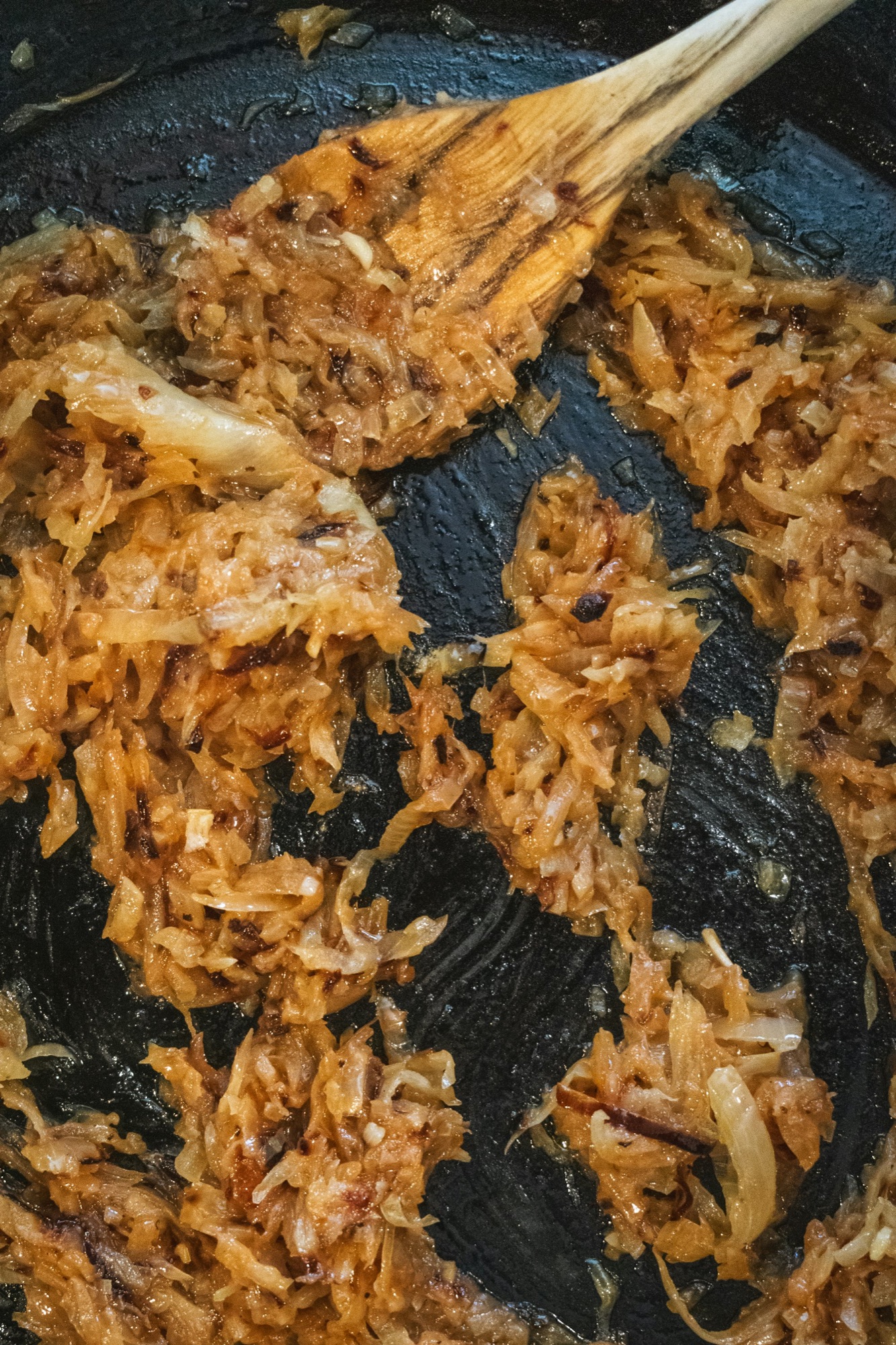
- Expect 30-45 minutes for a deep, evenly browned result — 10 minutes gets you softened, translucent onions, not caramelized ones.
- Scrape up any browned bits sticking to the pan as you go; that's flavor, not something to avoid.
- If the pan looks dry or onions start sticking too much, a small splash of water can loosen things without diluting the flavor much.
Why "quick caramelized onions" recipes exist, and their trade-off
Recipes that promise caramelized onions in 10-15 minutes usually rely on higher heat and added sugar or baking soda to speed browning. This produces a browner color faster, but the flavor is noticeably different — more one-dimensionally sweet, less of the deep, complex savoriness that comes from the slow breakdown of a real 30-45 minute cook. It's a legitimate shortcut for some uses, just not the same result.
A common failure mode
Onions that look brown but taste flat or slightly burnt-bitter, rather than sweet, usually mean the heat was too high — they browned on the outside faster than the sugars inside could properly develop, and some of that browning tipped into scorching rather than caramelizing. Lower heat and more time, not higher heat, is almost always the fix.