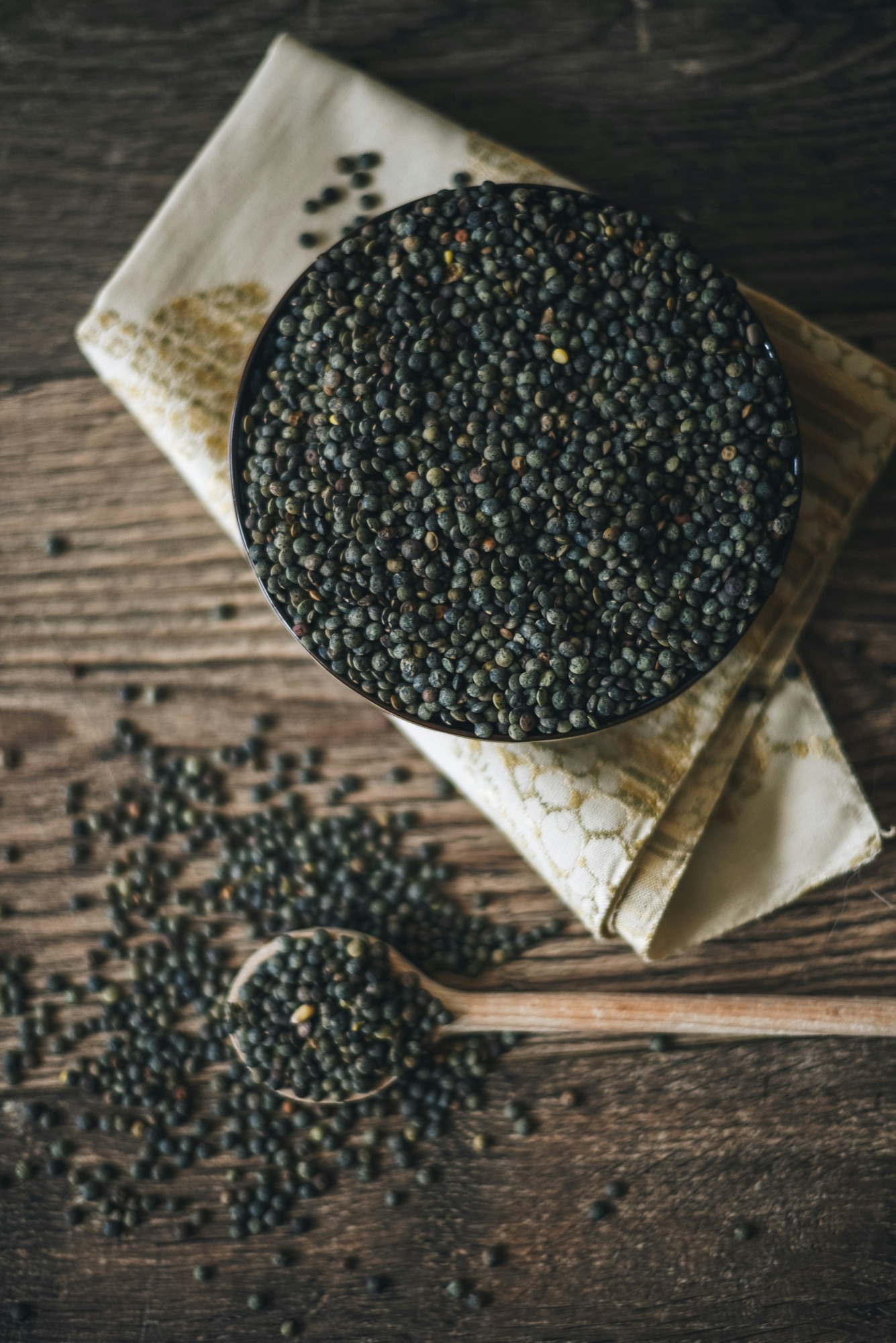
"Complete protein" gets used loosely in food marketing, but it has a precise nutritional meaning: a protein source that contains all nine essential amino acids — the ones the body can't produce on its own and has to get from food — in meaningful amounts.
What makes a protein "complete"
Protein is built from amino acids, and nine of them are classified as essential because the body cannot synthesize them itself. A food is considered a complete protein if it supplies all nine in reasonably usable amounts. Most animal proteins — meat, fish, eggs, dairy — are complete on their own. Among plant foods, soy (including tofu and edamame) and quinoa are two of the few complete proteins; most other individual plant proteins, like beans, lentils, or rice, are missing or low in at least one essential amino acid on their own.
Why this matters more for plant-based eating
If most of your protein comes from animal sources, this concept barely matters day to day — those proteins are already complete. It becomes genuinely relevant for vegetarian and vegan eating, where relying on a single incomplete plant protein source repeatedly could mean falling short on one or two specific amino acids over time.
The good news: combining fixes it
You don't need every meal to be a complete protein on its own — what matters is the overall pattern across a day, not each individual dish. The classic example is legumes and grains together: beans are low in an amino acid called methionine but reasonably high in lysine, while rice is the reverse — low in lysine, higher in methionine. Eaten across the same day (not even necessarily the same meal), they complement each other into a complete amino acid profile. This is part of why so many traditional plant-based cuisines pair a legume with a grain — rice and beans, chana masala with rice, dal with rice — not by accident, but because it works nutritionally.
The practical takeaway
If you're eating a variety of plant proteins across the week — legumes, grains, nuts, soy — you don't need to obsess over pairing every single meal perfectly. Variety over the course of days, rather than precision in any one dish, is what actually covers the full amino acid profile.